
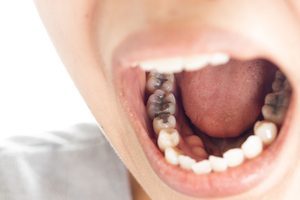
It’s only natural to want to build and maintain a beautiful, healthy smile to show off the co-workers, family, or friends. But if your enamel appears more gray or blue than pearly white, you might feel so self-conscious or worried about being judged to spend time with others, which can detract from your quality of life.
Thankfully, many dentists offer different cosmetic and restorative treatments to improve the appearance and function of your tinted teeth. Continue reading to learn more about 3 potential reasons for the discoloration and how your provider might treat it!
Cause #1: Metal Restorations
Historically, dentist relied on metal fillings and dental crowns to repair decayed or damaged enamel. Although the materials are durable enough to withstand daily biting and chewing, they can also leave teeth looking dark or dirty, which can leave you feeling too self-conscious to smile confidently.
Fortunately, many providers today are happy to help replace amalgam and metal restorations with tooth-colored materials instead. For instance, fillings can be made from color-matched composite resin, and ceramic dental crowns can be customized to match the size, shape, and tone of your natural teeth for beautiful, lifelike results.
Cause #2: Medications
Did you know that certain prescription medications can potentially affect dental development? For example, exposure to certain antibiotics, such as tetracycline, either in the womb or as a child can result in blue-gray enamel or horizontal stripes on your teeth.
You might also notice discoloration after a root canal because some antibiotics used contain ingredients like demeclocycline hydrochloride and/or triamcinolone acetonide, which can turn your enamel a grayish-brown hue.
Your dentist likely provides professional whitening or other cosmetic services, such as dental bonding or placing veneers, which can reduce or mask stubborn stains caused by exposure to certain medications.
Cause #3: Physical Trauma
Your enamel is a hard, protective shell that shields the nerves and pulp contained inside your teeth. But issues like severe decay, disease, or physical trauma can cut off the blood supply to the tender roots inside, which can eventually alter their color.
Depending on what happened, your dentist might recommend placing a dental crown to improve the affected tooth’s function and appearance, or extraction and replacement to restore a more beautiful and healthier smile.
If you’ve noticed that one or more teeth looks darker or discolored compared to its neighbors but you aren’t sure of the cause, your dentist can help identify the underlying issue and provide a customized treatment plan to help you meet your aesthetic goals!
Meet the Author
Dr. Kimberly Peters has 10+ years of experience helping children and adults alike build and maintain happy, healthy teeth and gums. She earned her Doctor of Dental Medicine from the Medical College of Georgia, and remains committed to continuing education so she can offer the latest treatment options, including cosmetic services, using advanced technology for more comfortable, accurate results meant to last. If you want to enhance your smile, you can request an appointment on the website or call (770) 922-1666.