
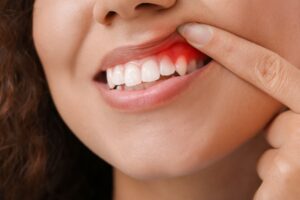
Healthy gums should be firm, pink, and comfortable. If your gums are sore, swollen, or inflamed, it’s your body’s way of telling you that something isn’t right. While occasional irritation may not be cause for alarm, persistent gum inflammation should never be ignored. Left untreated, some underlying causes can lead to more serious oral health problems, including gum disease and tooth loss.
Here are 3 common reasons your gums may be sore and inflamed.
1. Gum Disease
The most common cause of sore, swollen gums is gum disease. It begins when plaque—a sticky film of bacteria—builds up along the gumline. If plaque isn’t removed through regular brushing, flossing, and professional cleanings, it can irritate the gums and lead to gingivitis, the earliest stage of gum disease.
Symptoms of gingivitis often include:
- Red or swollen gums.
- Bleeding while brushing or flossing.
- Tenderness.
- Persistent bad breath.
The good news is that gingivitis is often reversible with prompt treatment and improved oral hygiene. However, if left untreated, it can progress to periodontitis, a more advanced form of gum disease that can damage the bone supporting your teeth.
2. Brushing or Flossing Too Aggressively
Although brushing and flossing are essential for maintaining healthy gums, using too much force can actually irritate the gum tissue.
Brushing with a hard-bristled toothbrush or scrubbing your teeth aggressively may cause soreness, gum recession, and increased sensitivity over time. Likewise, snapping floss forcefully between your teeth can injure delicate gum tissue.
Instead, use a soft-bristled toothbrush and gentle, circular motions when brushing. Floss carefully by guiding the floss between your teeth rather than forcing it against your gums.
3. Hormonal Changes
Hormonal fluctuations can make your gums more sensitive and susceptible to inflammation. This is especially common during pregnancy, puberty, menopause, or certain stages of the menstrual cycle.
During these times, increased hormone levels can cause the gums to respond more strongly to plaque, leading to redness, swelling, and tenderness.
Maintaining excellent oral hygiene and continuing regular dental visits are especially important during periods of hormonal change. Your dentist may also recommend more frequent cleanings if you’re at increased risk for gum problems.
Occasional gum irritation may resolve on its own, but persistent soreness, swelling, or bleeding deserves professional attention. Early treatment can often prevent more serious problems and help preserve your oral health. If your gums have been sore for more than a few days or your symptoms continue to worsen, schedule an appointment with your dentist.
About the Author
Dr. Kimberly Peters has been practicing dentistry for more than a decade. She graduated with her Doctor of Dental Medicine degree from the Medical College of Georgia (now known as the Augusta University Dental College of Georgia). Throughout her career, Dr. Peters has completed several hours of continuing education through the Hinman Dental Society, consistently working to expand her knowledge and skillset to better serve her patients. If you’re in need of preventive care, book online or call our Conyers office at (770) 922-1666.